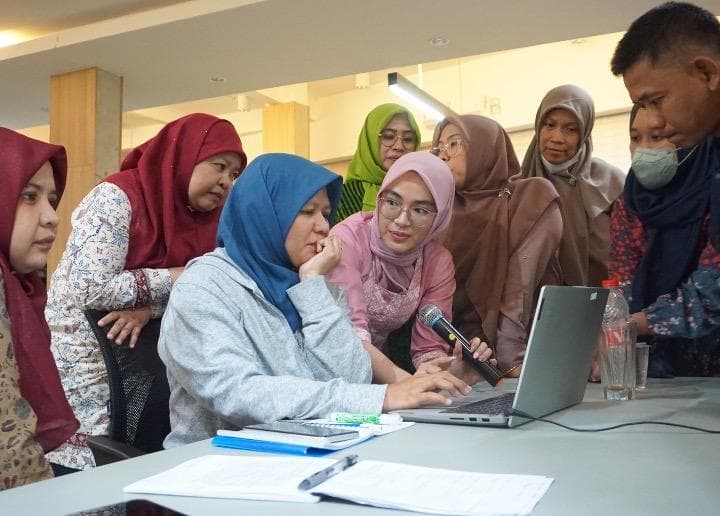
Kaizen Collaborative Impact

Kaizen

Back to impact

National scale across Indonesia, primarily reaching micro-enterprises.

Helping MSMEs Understand AI for Productivity and Competitiveness

MSMEs need practical ways to use AI without losing local business context, customer closeness, and daily execution capability.
Helping MSMEs Understand AI for Productivity and Competitiveness

Problem

MSMEs need practical ways to use AI without losing local business context, customer closeness, and daily execution capability.

Intervention

AIM ASEAN introduces AI use for content ideas, operational efficiency, product catalogues, customer service, and business planning.

Beneficiaries

12,101 MSME actors across sectors in Indonesia, with 64.13% women entrepreneurs.

Statistik Resmi Program

AIM ASEAN Impact Dashboard

Visualisasi sebaran 12.101 pelaku UMKM penerima manfaat di seluruh Indonesia.

12.101
Total Beneficiaries

Demografi Gender (GEDSI)

Mendorong keterwakilan wirausaha perempuan secara inklusif.

Wirausaha Perempuan
64,13%7.760 UMKM
Wirausaha Laki-laki
35,77%4.328 UMKM

Kategori Skala Usaha

Klasifikasi resmi skala wirausaha penerima manfaat.

Mikro99,12% (11994 UMKM)

Menghidupi ekonomi akar rumput dan rumah tangga secara langsung.

Kecil0,59% (71 UMKM)

Usaha berskala kecil dengan kapasitas produksi mandiri.

Menengah0,30% (36 UMKM)

Usaha menengah dengan struktur organisasi yang mapan.

Distribusi Sektor Industri

Pengelompokan jenis usaha berdasarkan sektor operasional harian.

Kuliner
43,87%
5.309 pelaku usaha
FMCG
12,31%
1.490 pelaku usaha
Jasa/Service
11,01%
1.332 pelaku usaha
Industri Kreatif
10,06%
1.217 pelaku usaha
Fashion
8,31%
1.005 pelaku usaha
Pariwisata
3,20%
387 pelaku usaha
Lainnya
11,25%
1.361 pelaku usaha

Early results and indicators

  • 12,101 MSMEs educated: 11,994 micro enterprises (99%), 71 small enterprises (0.59%), and 36 medium enterprises (0.30%)
  • GEDSI gender representation: 7,760 women entrepreneurs (64.13%) and 4,328 men entrepreneurs (35.77%)
  • Distribution across 7 key sectors: 43.87% culinary, 12.31% FMCG, 11.01% services, 10.06% creative industry, 8.31% fashion, 3.20% tourism, and 11.25% others
  • Practical AI curriculum for micro-enterprises covering content, operational efficiency, and customer service

Lessons learned

  • AI for MSMEs must be practical and based on real examples
  • Follow-up mentoring is more valuable than one-off sessions
  • Materials must be adapted to business sectors and digital readiness levels

Documentation

Activity gallery

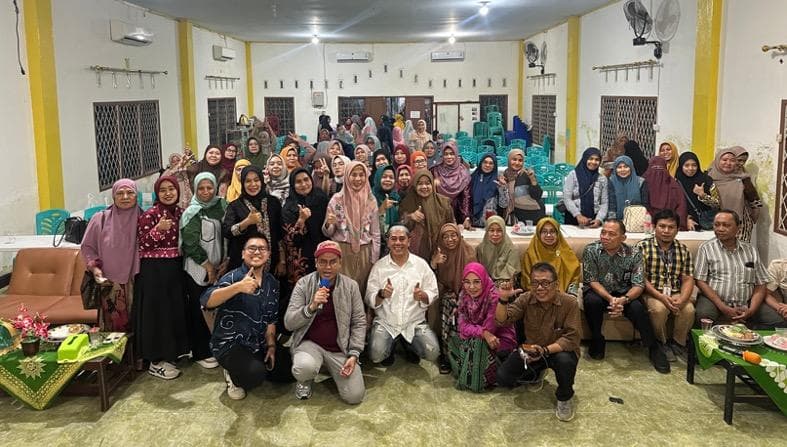
Documentation Helping MSMEs Understand AI for Productivity and Competitiveness

Partners

ASEAN FoundationMSME communitiesCSR partnersEntrepreneurship facilitators