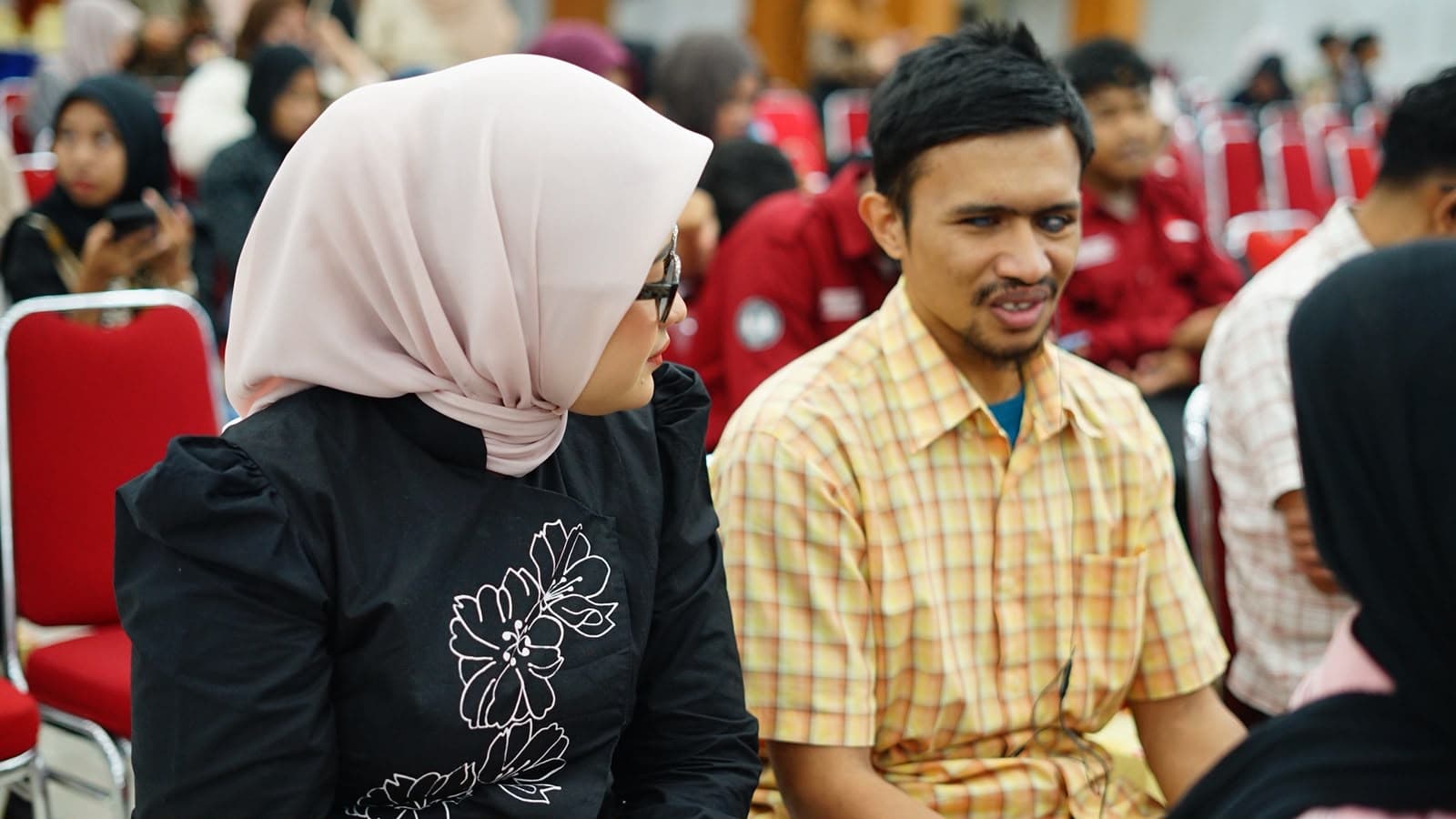
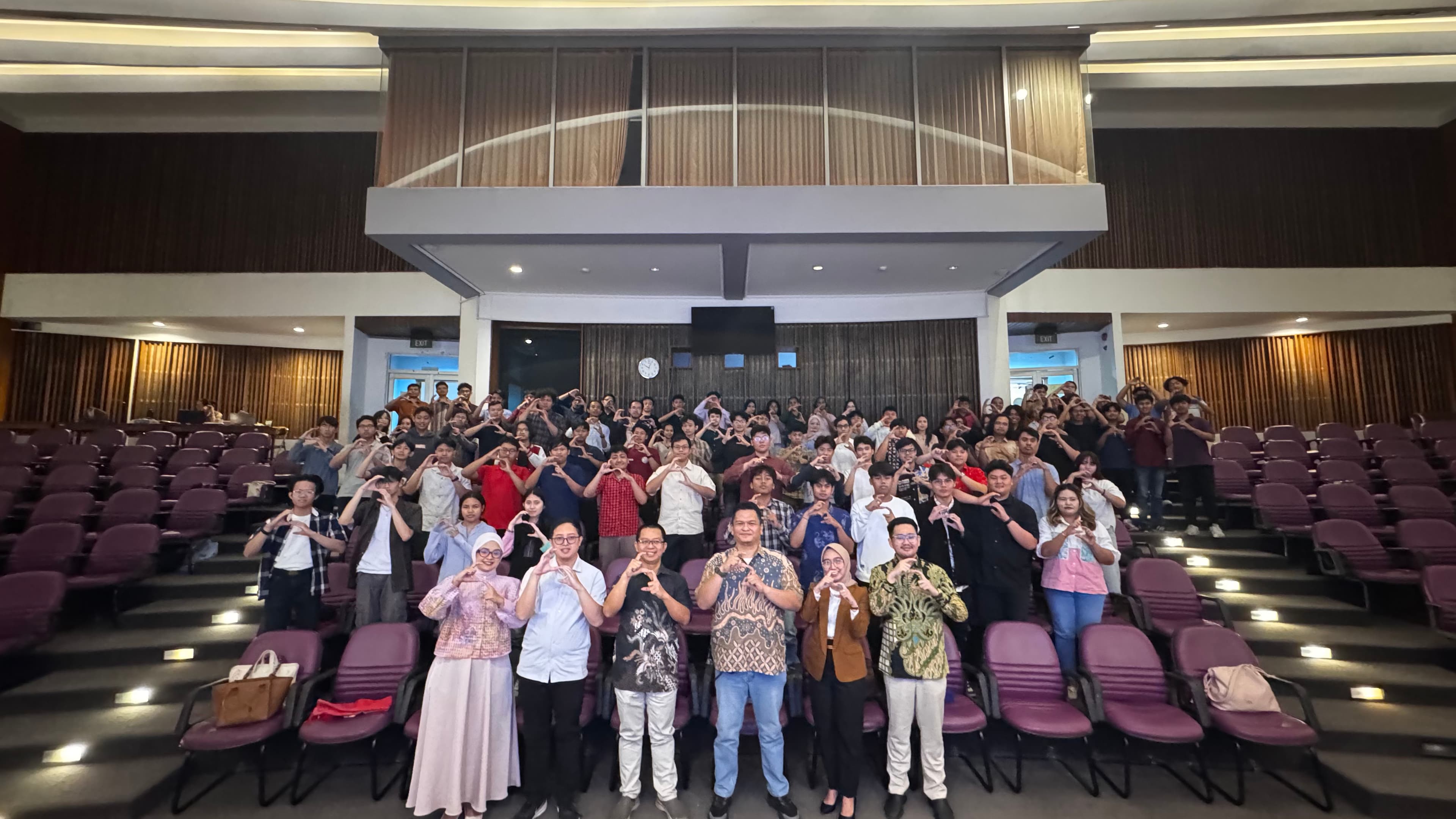
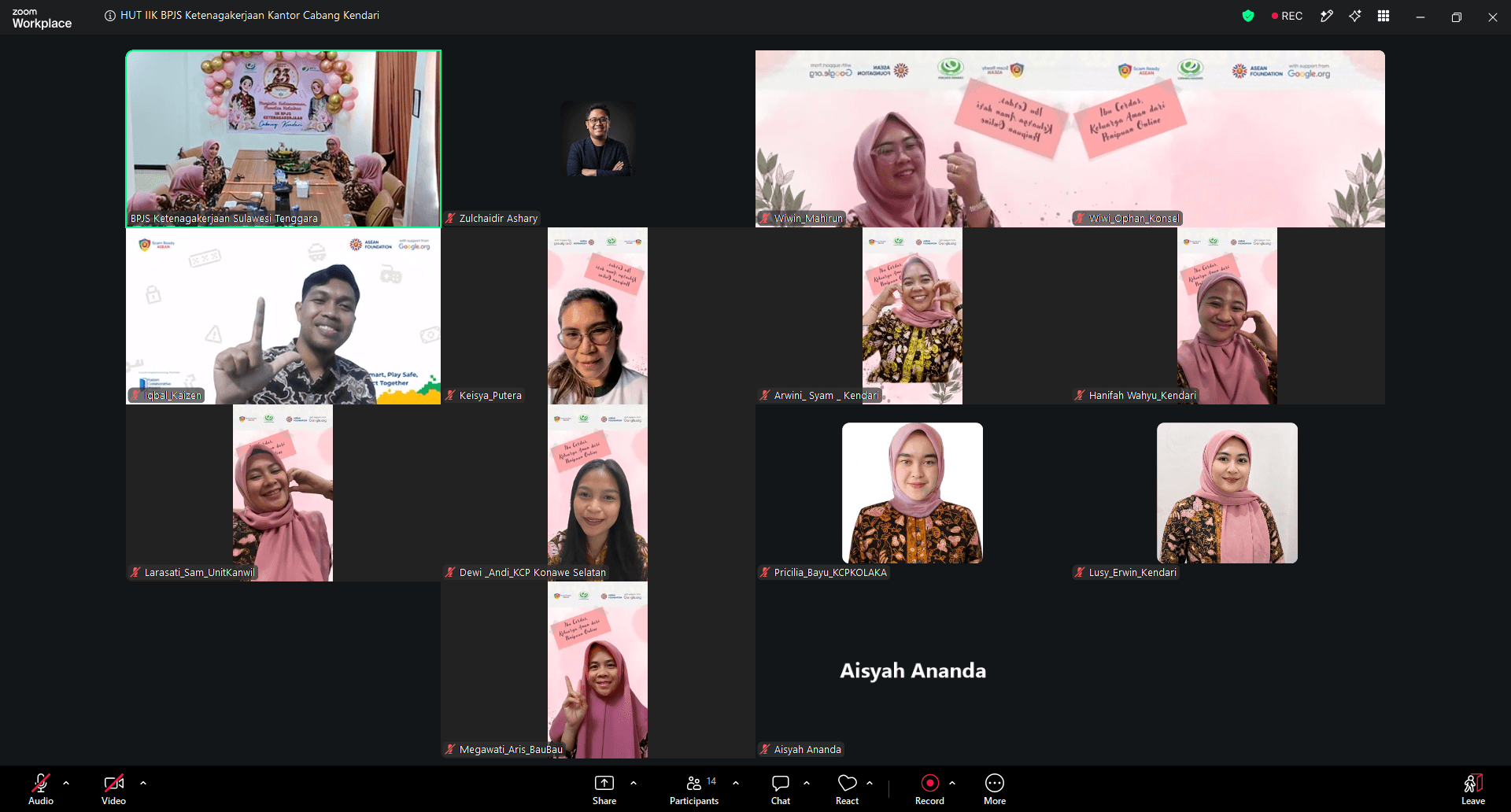
Kendari, Southeast Sulawesi, 3 October 2026 — Offers to have children featured as photo talents, messages impersonating banks, and the risks of sharing childhood photos were among the digital security issues discussed in the Scam Ready ASEAN training with the Ikatan Istri Karyawan (IIK) of BPJS Ketenagakerjaan Kendari Branch on Saturday (3/10/2026). The activity equipped the board members and members of IIK BPJS Ketenagakerjaan Kendari with the ability to recognize the signs of fraud and to build the habit of verifying before responding to information in the digital space.
Held to commemorate the 23rd anniversary of IIK BPJS Ketenagakerjaan Kendari, the activity served as a momentum for members to strengthen the family's role in facing various risks in the digital space. In collaboration with the ASEAN Foundation and Google.org, the Scam Ready ASEAN training carries the tagline "Learn Smart, Play Safe, Protect Together" and uses gamification and case study simulations to deliver an interactive learning experience. Participants were invited to test their understanding while recognizing how scammers exploit personal information, emotional conditions, and the victim's trust.
Participants' concerns were evident from the various questions that arose during the session. Hanifah, one of the participants, for instance, highlighted a child photo talent offer she received through social media. She questioned what steps should be taken when a child's photo has already been sent, but the offeror then requests additional data such as an ID card and begins to raise suspicion.
"If we as parents feel interested and have already sent our child's photo, but then feel something is off when asked for an ID card, is it enough to block the number? There is a worry that the child's photo that has already been sent will be misused for something it shouldn't be," said Hanifah.
Responding to this, Master Trainer of Scam Ready ASEAN from Kaizen Collaborative Impact, Muhammad Iqbal Gunawan, emphasized that a sense of unease is a signal to immediately stop the interaction. He explained that digital fraud can begin with the collection of pieces of personal information, such as a child's name, school, and date of birth, which are then used to build a profile of the potential victim. Therefore, the public is urged not to continue communication through the contact provided by the offeror, but instead to verify independently through the official channels of the relevant institution.



 Program UpdateKaizen